Argentina sits at the bottom of the world, far from any international flight hub, and embroiled in economic problems that sometimes make visitors nervous. But Argentina is not only a fascinating, exciting, and incredibly huge country to visit, it’s also a wonderful country to live in.
Argentina is not for people that like the trains to run on time, the electricity lines to always provide power. And it’s not for people who can’t deal with bureaucracy on a daily basis. But for those that persevere, living in Argentina (if only for a short while) is a rewarding experience, that might change your life. It changed mine.
I lived in Argentina for 5 years and traveled in and out of the country many times (dozens of times if you include visa runs). I learned to speak Spanish fluently, owned and ran a business there, and made lots of friends. Argentina has a lot to offer. Despite the financial problems, and sometimes because of them, it’s a rising South American hotspot for expats and digital nomads. Here’s why:
Contents
- The Blue Dollar And Milei’s Reforms: What Changed For Expats
- Pros & Cons Of Living In Argentina
- Moving To Argentina
- Where to live in Argentina
- Working in Argentina
- Travel in Argentina
- Frequently Asked Questions
The Blue Dollar And Milei’s Reforms: What Changed For Expats
You cannot understand the cost of living in Argentina without understanding the dollar. For years, Argentina had a large gap between the official exchange rate and the dolar blue, the informal cash-dollar rate used outside the banking system. That gap shaped almost every expat budget: someone changing US dollars at the blue rate could sometimes live much more cheaply than someone converting money at the official rate.
That old playbook changed under Javier Milei.
In December 2023, Milei’s economy minister Luis Caputo announced a shock devaluation, moving the official exchange rate from about 365 to 800 pesos per US dollar, according to Reuters. In April 2025, the Central Bank launched stage 3 of the economic program after an IMF-backed US$20 billion arrangement, allowing the peso to float inside a currency band and lifting key foreign-exchange restrictions for individuals, including the old USD 200 monthly cap.
The result is that the blue dollar still matters, but it is no longer always the magic trick it once was. On May 4, 2026, TN reported the blue dollar at ARS $1,400, the official Banco Nacion dollar at ARS $1,415, the MEP dollar at ARS $1,443.69, and the CCL dollar at ARS $1,500.76. The blue/wholesale gap was only 0.64%.
For expats, the practical lesson is simple: check the current rates before moving money. Sometimes cash, bank exchange, cards, MEP-style transfers, or digital wallets can produce very different results. Budget in dollars, update peso prices often, and do not rely on old advice that assumes Argentina is automatically cheap if you arrive with cash.
Pros & Cons Of Living In Argentina
Some thoughts on why you should spend time here
First, the pros and advantages:
1. Fascinating People
Many Latin Americans think that Argentines are egoistas (egotists).
But it’s easy to see why they consider themselves a cut above the rest.
Do you know how an Argentine kills himself? He climbs up on his ego, and then throws himself down! ~ Pope Francis
Argentines are handsome. Argentine beef is the best in the world. The wine is in a class of its own. Argentina’s countryside is as spectacular as Switzerland, Spain, or the United States. They have the best footballer in the world. The Pope is Argentine. And a couple of royals in Europe were born here. The Argento accent is the coolest in the Spanish-speaking world. And the sexiest dance in the world, the Tango, was born in the immigrant slums of Buenos Aires.
What’s not to be proud of?
Are they cocky? Well, yeah. But there’s more to it than that. It’s complicated. And complicated people are often the most interesting ones. I’ll generalize her by saying that when it comes to working, the people of Argentina are not interested in being lawyers and accountants. They want to be painters, scholars, musicians, and movie stars.
Argentines are either deep or shallow, depending on how you look at them. The proof is in the pudding: the country boasts the highest density of psychologists in the world (per capita).
Psychoanalysis is the norm. Everyone sees someone about their relationships with their parents, their partners, and everyone else they meet.
And despite the natural beauty of the people, plastic surgery is big business. Shallow? Or practical?
I always found Argentines to be curious, friendly, and funny. The culture of cheek-kissing and hugging, while a little disconcerting at first, helps bond friendships. In fact, friendships are so important that the entire country celebrates Friend’s Day (Dia del Amigo).
As far as I am aware, this is an Argentine invention but it might have spread to neighboring countries in recent years. It’s one of the most fun days of the year. Friends leave work, family life, and the dress of life behind for a few hours to hang out with old friends. They eat too much and get drunk. All in the name of fun.
2. Argentina is Big and Beautiful
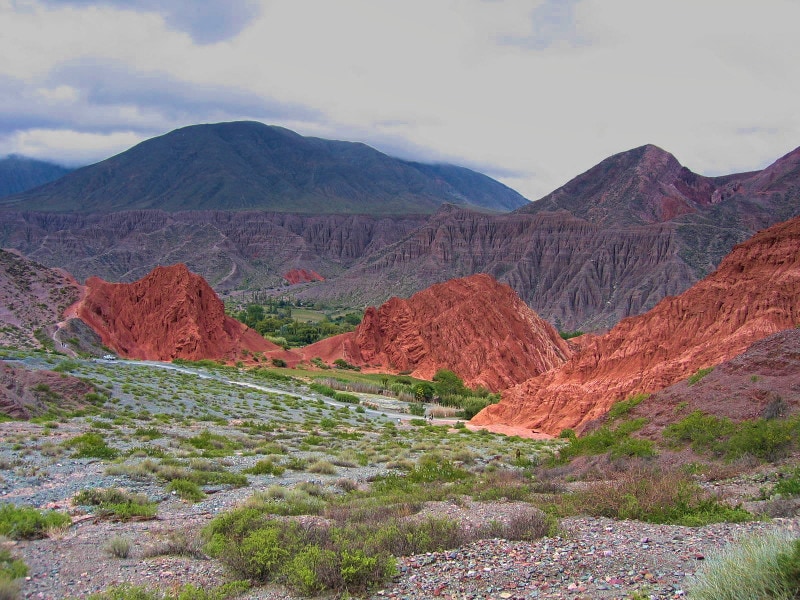
The beautiful colourful hills near Pumamarca
Argentina is 11 times the size of the United Kingdom and 4 times bigger than Texas.
Population: 43 million. Compare this to Mexico’s 130 million and Colombia’s 50 million.
At 2.78 million Km, this narrow country stretches all the way from the tropics to the bottom of the world. Ushuaia, which sits at the narrow end of Argentina near the South Pole is the most southern city in the world.
The Andes mountain range marks the west of the country, where you will find the highest mountain in the southern hemisphere, Aconcagua. From the Andes across to Buenos Aires and the border with Uruguay (a 12-15 hour straight drive), the wide-open Pampas of Argentina stretch in every direction. This is cattle-rearing land and is where gauchos (Argentine cowboys) tend to the best beef in the world.
There’s a lot to see. Traveling to Argentina? A week is simply too short. Two weeks? Don’t make me laugh! 5 years was too short for me. This country is immense - it’s the second biggest South American country after Brazil.
3. Distinctive and Fascinating Culture
Tango, gauchos, Maradona, Messi, Carlos Gardel, steak and wine, Borges, Che Guevara. Argentina is a country of readers and artists.
It’s been said many times but places like Buenos Aires and Bariloche are strikingly similar to parts of Europe. Buenos Aires reminds me of Madrid or Paris.
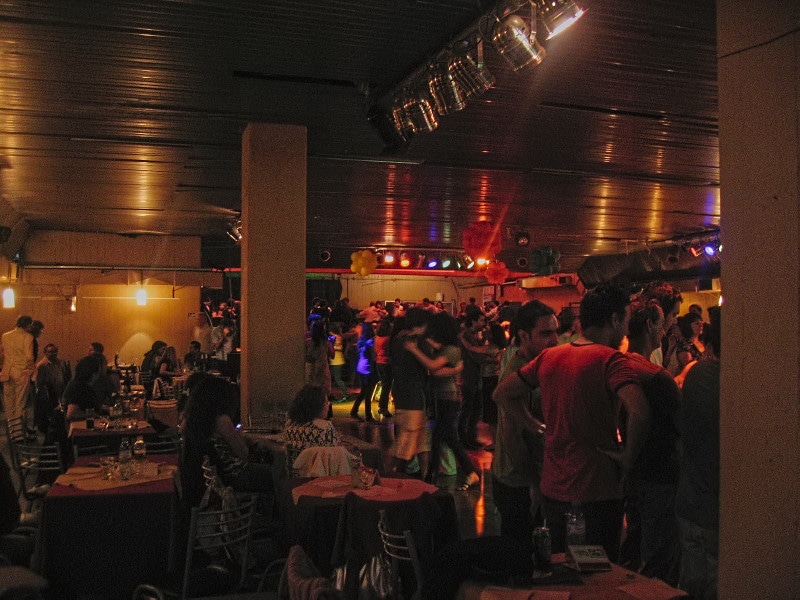
La Viruta Tango Club in Palermo. The disco/hip version of Tango
Another fact I always enjoyed: Argentines are the best-read people in Latin America. Reading is one of my passions and I’ve always felt a kindred spirit with the bookish local people here. There are a lot of bookstores in Buenos Aires (and the city hosts the most beautiful library in the world).
Every year, a book fair in Buenos Aires attracts over a million people.
They come from all over the world to browse books, talks about books, and buy books. It’s the most important literary event in the Spanish-speaking world. Big shooters in the Spanish writing world and English writing world speak at the event every year. This ultra-popular event showcases the importance of the written word is in this part of the world.
One of the most beautiful bookstores you will ever visit is the Ateneo Grand Splendid in the center of Buenos Aires. Even if you have no interest in books (shame on you) it’s a cool spot to just chill and enjoy the relaxing environment. Outside it’s a cacophony of cars, buses, and people. Inside it’s calm.
The bookstore used to be a theatre, in case you couldn’t tell from the photos. It reminds me of a mini Teatro Colón (Argentina’s beautiful and highly respected opera theatre). This brings me to my next point.
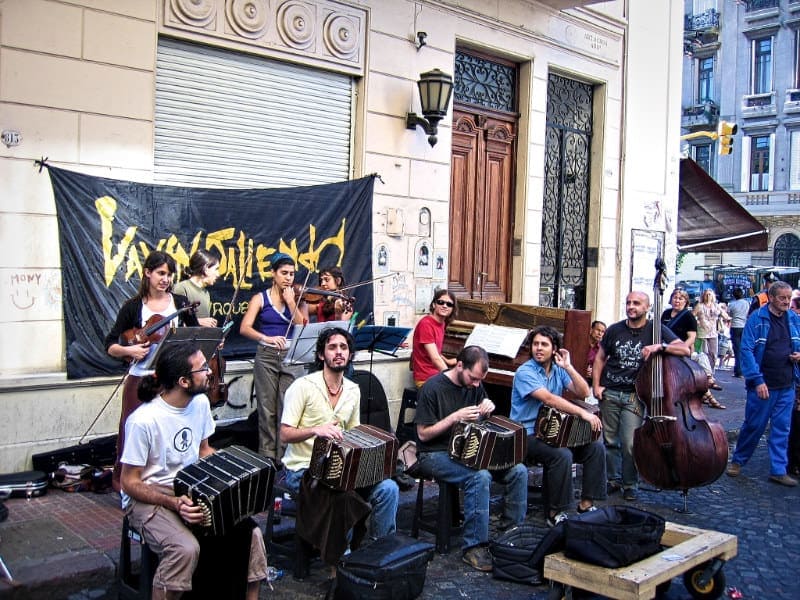
Tango musicians in San Telmo. I could listen to this all day.
Theatre, music, and the arts in general are well supported. Buenos Aires is one of the best capital cities for finding music, theatre performances, comedy shows, dance expositions, and art galleries. Check the government’s Agenda Cultural website for details of all the best cultural events in the city.
4. Low Cost of Living
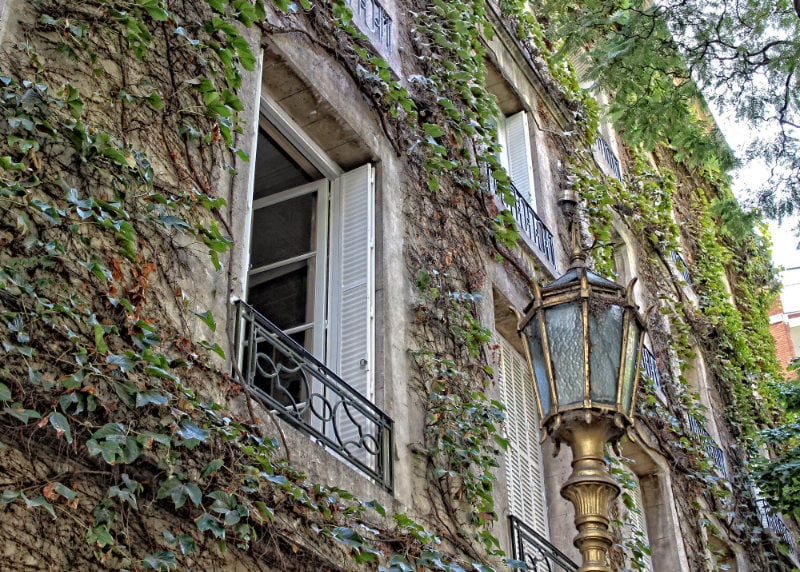
The facade of a house somewhere in Buenos Aires. I’ve forgotten the location.
I have a lonely planet guide from 2001 and it talks about how expensive the country was. 2001 also happens to be the year of the infamous financial crash which resulted in the biggest default in history. A few months after I bought that book, it became one of the cheapest destinations in the world (not for locals but for visitors where the cost of living was reduced by 75%). It was easy back then to live a relatively comfortable life for $600 a month.
Now I’m not suggesting that people travel the world like vultures, looking for opportunities to spend money where the locals are suffering. However, there’s nothing wrong with spending money in a depressed economy. If your dollars, euros, or whatever currency you have stretches further, well, spend more!
That basic pattern is still worth understanding, but the details changed after Milei’s exchange-rate reforms. Argentina can still be good value for people earning in dollars, euros, or pounds, but you should not assume that cash dollars automatically beat cards, bank exchange, or MEP-style options by a wide margin.
5. The weather and climate
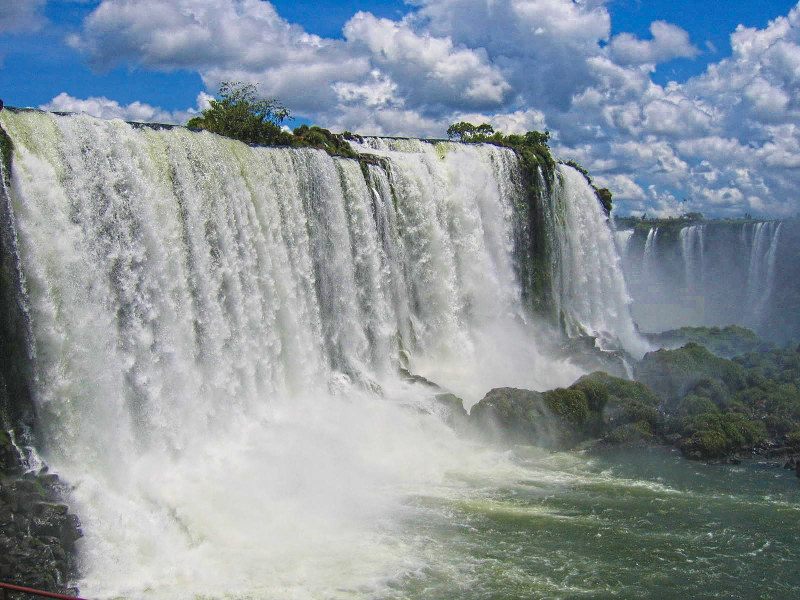
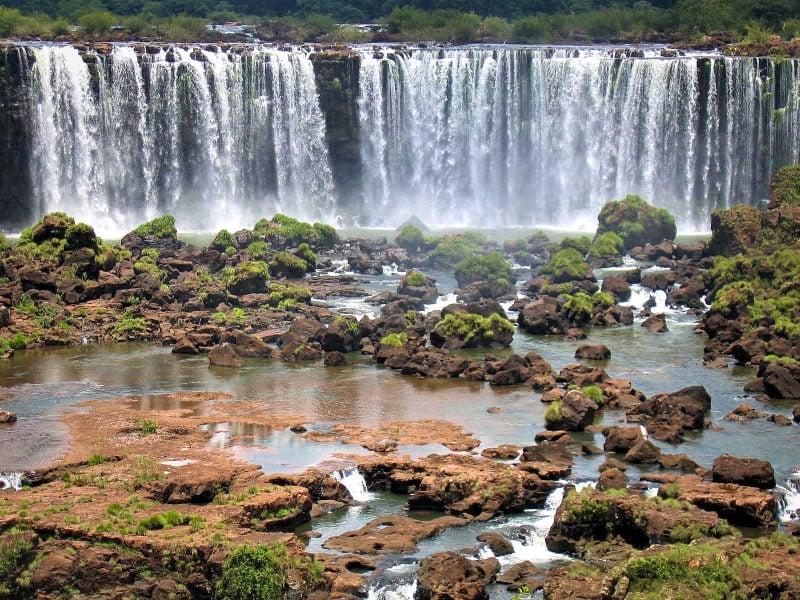
The magnificent _Cateratas de Iguaz_ú in the north of Argentina (on the border with Brazil)
The weather is more like Europe or the United States than Colombia or Peru. Argentina is a huge country and has several climates but in places where expats are most likely to live, the climate is comfortable. Buenos Aires has four seasons. The summer months can be hot and humid but thankfully, the humidity doesn’t last for long, and for most of the year it’s a milder climate. I’d compare it to Barcelona.
For a few weeks in winter (July/August), it can be cold. But it (almost) never snows.
Compare this to other Latin American countries such as Peru, Colombia, Mexico, or Costa Rica where the weather stays consistent throughout the year. It’s usually hot or hot and wet further north in the continent. Some people enjoy this kind of weather but if you prefer to experience seasons, Argentina is a better choice. The best time to visit Argentina is now!
6. Unique And Alluring Spanish Dialect
Perhaps you have plans to move abroad and learn a foreign language. The Spanish here is beautiful to listen to and fun to learn. I always enjoyed speaking Argentino, and the accent stuck. It sounds different from the Spanish of other countries and uses different verb forms. In some ways, it’s easier to learn.
Argentine Spanish, like most Latin American dialects, drops the Vosotros (plural informal) version of the verb. Not needing this form of conjugation is a bonus.
The imperative (giving orders such as go!, help me!, buy it!) form of the verb is easy and in 99% of cases follows a simple rule only seen in Argentina.
The informal 2nd person verb structure is also much simpler than in other dialects. Instead of
-
Tu tienes
-
Tu digas
-
Tu sigas
-
Tu entiendes
-
Tu hablas
The local dialect uses these forms
-
Vos tenés
-
Vos decís
-
Vos seguís
-
Vos endendés
-
Vos hablás
I hope you can see a pattern. Just lop off the er, ir, or ar and add és, ís, or ás.
Argentine Spanish is the fourth most spoken dialect (based on country size) so you’ve got plenty of people to practise with.
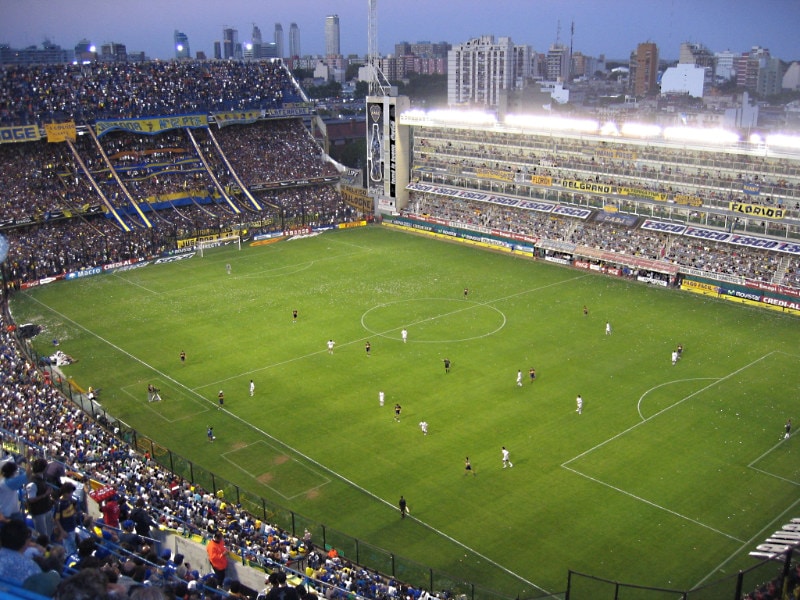
Boca Juniors football game at the La Bombonera stadium la Boca
The (brief) cons and disadvantages of life in Argentina
-
Argentina is far from everywhere. Travel from Europe or the US takes 12 hours or more by air. Bus journeys internally and around the rest of South America are always long.
-
The problems with inflation and government instability affect everyone. Argentina is unfortunate to have won the unwelcome title of the only country in history to return to developing nations status. Poverty is apparent even in the wealthier parts of the country.
-
Finding a job is difficult and working legally is just as hard to do.
-
Internet, communications, and electricity services can be unreliable.
-
The food is often called bland, unhealthy, unbalanced, or lacking diversity.
Moving To Argentina
Here’s what you need to know before traveling or planning a move to Argentina.
The local currency is the Argentine Peso. Written as ARS and uses the same symbol as the dollar, $.
The official language is Spanish. There are many unofficial indigenous languages spoken in the provinces, but Spanish is the language of Government and the one spoken on the street by 99% of the people. Learning the language will open up a lot of opportunities.
English is spoken in cities and many people know French, German, and Portuguese (Brazilian).
ATMs don’t always work. It’s common, especially in times of crisis (a regular occurrence) for the ATMs to stop working.
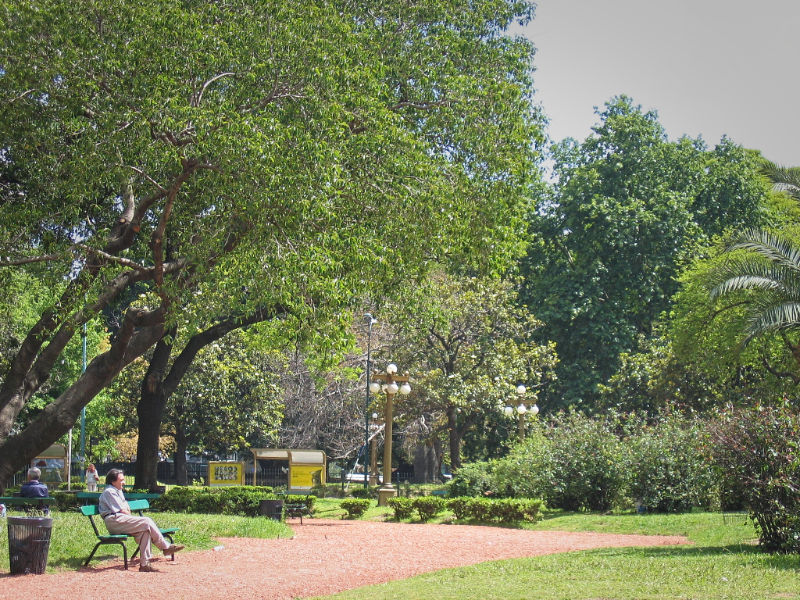
Argentine man enjoying Palermo park in Buenos Aires
How much does it cost to live in Argentina?
Argentina prices only make sense if you say which exchange rate you are using. A rent or restaurant bill in pesos can look cheap or expensive depending on whether you convert at the official, blue, MEP, CCL, or card rate. In May 2026 the blue and official rates were close, but that has not always been true and may not stay true.
This is a question I’ve been asked many times, It’s hard to answer for two reasons:
1. Your lifestyle will determine the overall price
2. Inflation increases and rental prices change rapidly
However, if you live frugally and are content to live in a modest apartment, you can get by on $1200 a month. Half of this will go on rent.
For comparison, the cost of living in Buenos Aires is 200% cheaper than in New York or London.
Electrical goods and imported clothes will blow up your budget faster than you can say “inflation”. The government imposes taxes on imported consumer electronics. I believe it’s designed this way to encourage sales of domestic products. But since nobody in the country can make a decent tv or washing machine, it’s effectively just another tax on the working and middle class.
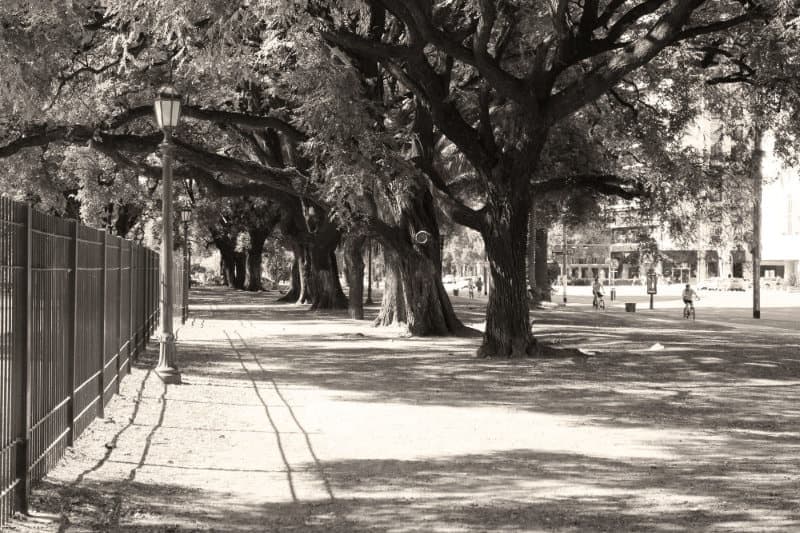
Trees lining a park beside Avenida Libertador
What about Visas for Argentina?
Thought you might ask that one.
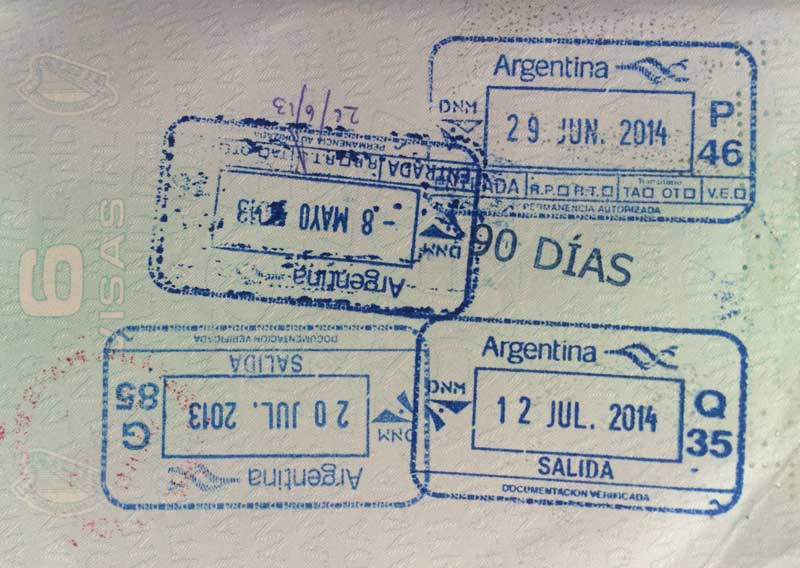
Tourist visas offer a generous 90 day stay for most western countries, after which you can return to the country for a further three months once you leave Argentina or cross the border into a neighboring country. That’s a total of 6 months with just one visa run.
Tourist visas for the country are easy to get and last 90 days. You can also extend them without complications. You could spend a long time traveling in and around Argentina without having to worry about Visas - anyone that’s traveled long term in Africa or Asia will understand what I’m talking about here.
You can leave and come back the same day and in my experience, nobody is ever questioned. Leaving and returning on a permanent basis is possible. The easiest way to do this is to grab a ferry to Uruguay if you’re living in Buenos Aires.
US citizens should check the Department of State website for updates
The Rentista visa, vista rentista in Spanish, is a good option if you can prove that you can support yourself with a regular income. This is referred to as an income-based residency visa or a “person of independent means visa”. These rules also apply to pensioners.
According to Migraciones, rentista residence is for people who can support themselves with resources or income from outside Argentina, not with local employment. The process is handled through RaDEX, and Migraciones says these residence applications are personal and simple, so you do not need a lawyer or gestor.
For 2026, the important number is no longer a fixed ARS $30,000 monthly income. You must prove income equal to at least five times the Salario Mínimo, Vital y Móvil. With the May 2026 minimum salary at ARS $363,000, that means at least ARS $1,815,000 per month. Migraciones also says the funds must enter Argentina through financial institutions authorized by the Central Bank.
DNM’s current fee table lists temporary residence at 50 UMSM for MERCOSUR citizens and 100 UMSM for extra-MERCOSUR citizens. With 1 UMSM listed as ARS $1,000, that is ARS $50,000 or ARS $100,000 before any optional preferential appointment or consular charges.
You’ll also need
-
Valid passport (try to have at least a year left before expiry)
-
An Argentina police report
-
A police report from your home country or country of residence
-
Certificate of address (in Argentina) or a utility bill in your name (for Argentina)
-
Immigration stamp from when you entered the country
And lots of patience. Things take time in Argentina. Don’t move there if you can’t go with the flow.
More information (in Spanish).
The visa allows you to stay for a year with an extension for up to three years.
Under 35s can work and live in the country for one year with the Argentina Working Holiday Visa programme
If you’re young (under the age of 35) you can use the Argentina Working Holiday Visa program. This is a 12-month visa designed to allow younger people to live in Argentina and work at the same time as a means of supplementing their income.
Citizens of the following countries are eligible:
-
Australia
-
Denmark
-
France
-
Ireland
-
New Zealand
The visa does not include a spouse or partner. You must apply for this visa outside of the country.
There are only 1000 spots available and I would have thought these visas would go like hot cakes. But the Irish ambassador to Argentina told me a few years ago that they never fill the quota of visas. Sounds like a wasted opportunity to spend a year in a beautiful country without the hassle of immigration procedures.
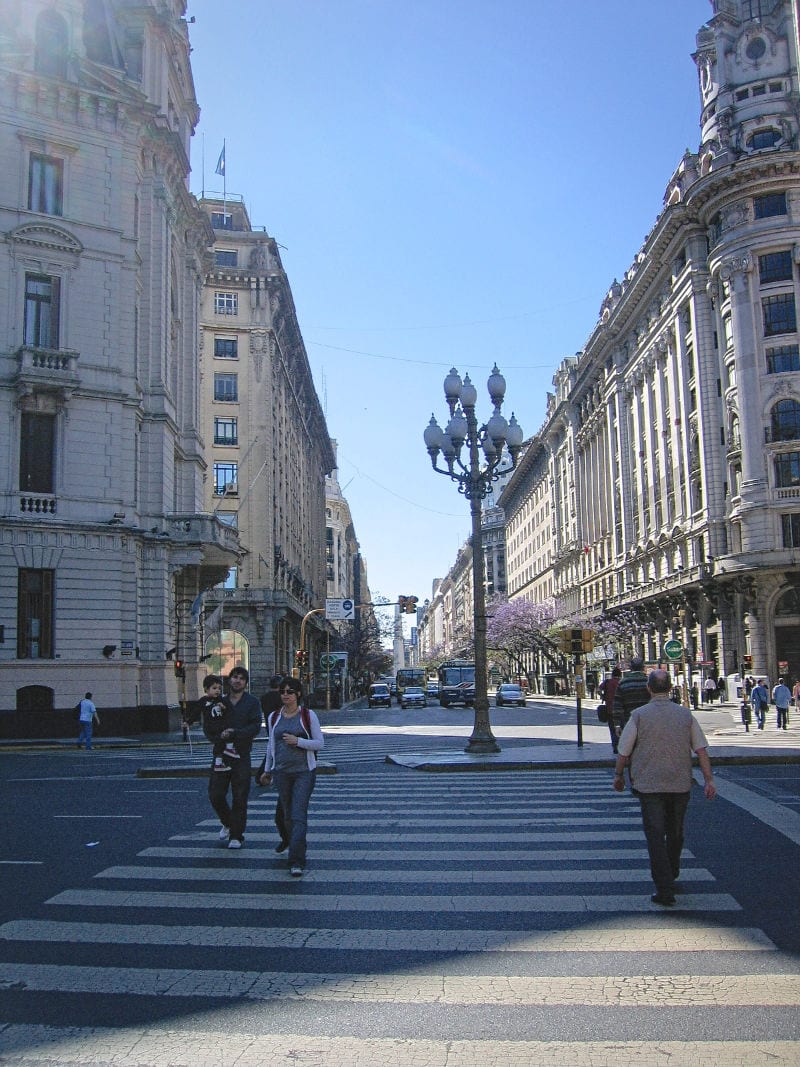
The streets of the center of Buenos Aires.
What about overstays?
There’s a significant percentage of tourists and visitors that overstay their visas and opt to pay the fines (around $100). There are no real penalties apart from the fine. You can always reenter the country but I wouldn’t count on this always being the case. If you’re on a tourist visa it’s best to take a trip over to Uruguay and back and that solves your visa problem for another 3 months.
Money, ATMs, The Blue Dollar, MEP And Card Rates
Cards with PIN and chip work better. Bring several cards from different banks if possible. You never know when one ATM system will go down. Some ATMs charge over $5 for a withdrawal of less than $200 (whatever the maximum is at the time).
Ask around on the forums and check with local expats to find out which ATMs have the lowest fees.
Argentina has several dollar rates in daily use. The best way to get pesos can change quickly, so check the spread before you withdraw, transfer, or exchange money.
| Rate | What it means | May 4, 2026 reference |
|---|---|---|
| Official dollar | Bank and official market reference rate | ARS $1,415 at Banco Nacion |
| Blue dollar | Informal cash-dollar market rate | ARS $1,400 |
| MEP dollar | Local securities-based market dollar | ARS $1,443.69 |
| CCL dollar | Cable/blue-chip swap rate used for moving money abroad | ARS $1,500.76 |
| Card or tourist dollar | Card-payment conversion including taxes/surcharges | ARS $1,839.50 |
Those figures came from TN’s May 4, 2026 exchange-rate roundup. Use them as a snapshot, not as a fixed planning number.
For everyday life, this means:
- Check the official, blue, MEP, CCL, and card rates before moving a large amount of money.
- Do not assume cash is always best. The blue-dollar advantage can narrow or widen.
- Keep more than one card, and test small withdrawals or purchases before relying on a method.
- Watch ATM fees and withdrawal limits, especially when inflation pushes prices up.
- Use legal banking, card, transfer, or exchange options where possible. The blue dollar is part of Argentine life, but it is an informal market, not a neat travel hack.
Food
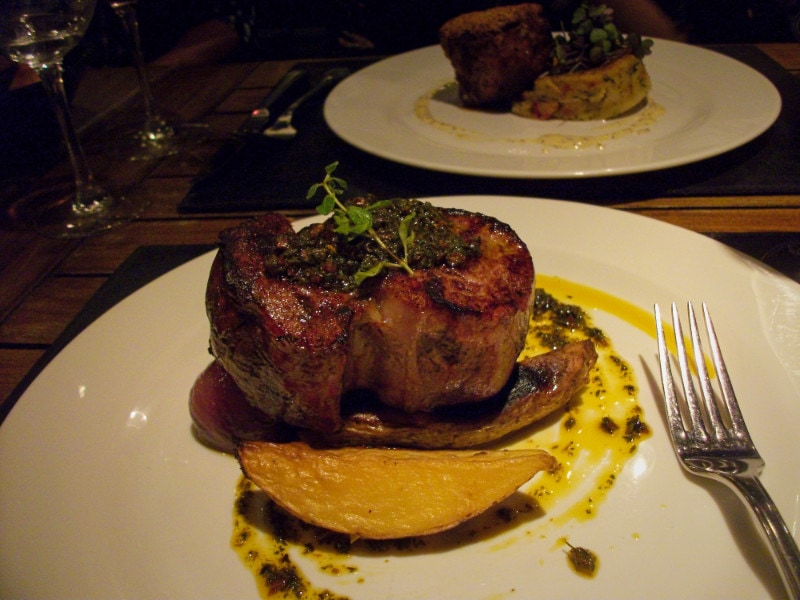
It’s not all charcoal and ribs. Argentina has a wide selection of fine dining options.
Argentines love meat. It’s one of the countries with the highest consumption of meat in the world. They also produce some of the world’s best wine, so naturally, they like that too.
Italian food influences everything else.
Vegetarians will struggle in Argentina. In fact, I can’t remember ever seeing any male friends of mine eating salad (or vegetables for that matter). You might be stuck with pizza and pasta if you’re a veggie. Delicious, but not exactly plant-based.
Human Rights
Women can expect a few wolf-whistles and machismo in the street. This might even happen at work. Argentine men love to express how they feel about parts of your body - stuff they’d get arrested for in Los Angeles or London. It’s part of the culture. I am not saying it’s right, merely warning ladies that will happen. But this cat calling never goes beyond this.
A study from 2018 found that 75% of people in the country think that a policy of zero-tolerance for sexual harassment will make a positive change in society.
In 2010, Argentina became the first country in Latin America to allow same-sex marriage.
Standard of Living in Argentina
People always ask about the cost of living but to be honest, by the time I publish this article, the information will be out of date. Argentina’s currency fluctuates like a baby Deutschmark in the 30s or Zimbabwe’s paper money.
The financial crisis in 2001 caused the collapse of entire industries, family businesses, and the trust in the government. The country has never recovered. Inflation has been running at almost 30% a year for nearly two decades.
Back in 2006, when I first visited Argentina, expats were beginning to arrive. By 2010, there were many. The low cost of living was the main driving factor. It was like living in a Paris-New York-Barcelona hybrid at a fraction of the cost of those cities. Times have changed and it’s no longer the bargain destination it was, but if you can play the currency arbitrage game right, it’s still a value-for-money place to live. An amazing bottle of wine will still be ridiculously cheap here, no matter what the currency exchange rates show.
From 2002 to 2012, Argentina was one of the cheapest countries to live in for anyone with foreign currency. I first went there in 2006 and could enjoy a steak dinner in the best restaurant in town, with a classy bottle of wine for $20.
Those days are gone, along with many of the long-term expats from that time
Prices have risen quickly and accommodation owners put the rental prices up every year to keep up with inflammation. One-bedroom Airbnb apartments that cost $20 a night in 2014 were $50 a night by 2015.
The health service in Argentina is of a high standard. Unfortunately, funding for the public sector is insufficient. Travel insurance or health insurance is an absolute must for travel to Argentina. But if you’re planning on moving to Argentina or you want to spend an extended amount of time there, you should take out private health insurance. It’s not expensive and it gets you access to private hospitals. Instead of waiting weeks for treatment, you’ll get seen in a matter of days or even hours.
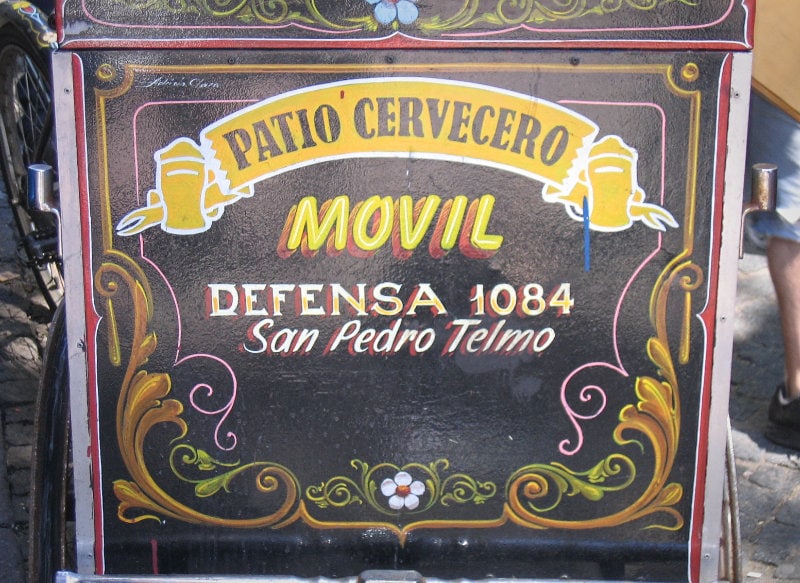
Street sign done in the beautiful Fileteado Porteño style native to Buenos Aires
Where to live in Argentina
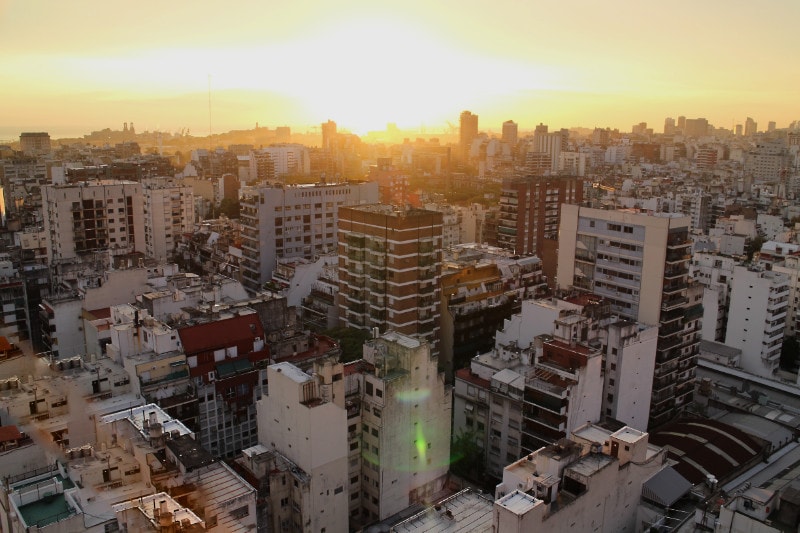
Most people chose to live in Buenos Aires. Argentina’s capital city is where the government sits, almost 4 million people live and work, and where you’ll most of the opportunities for work. It’s where many people have traditionally started with their move to Argentina.
However, Cordoba, Rosario, Salta, Mendoza, Bariloche, and Mar Del Plata are cities that expats call home (at least for a while).
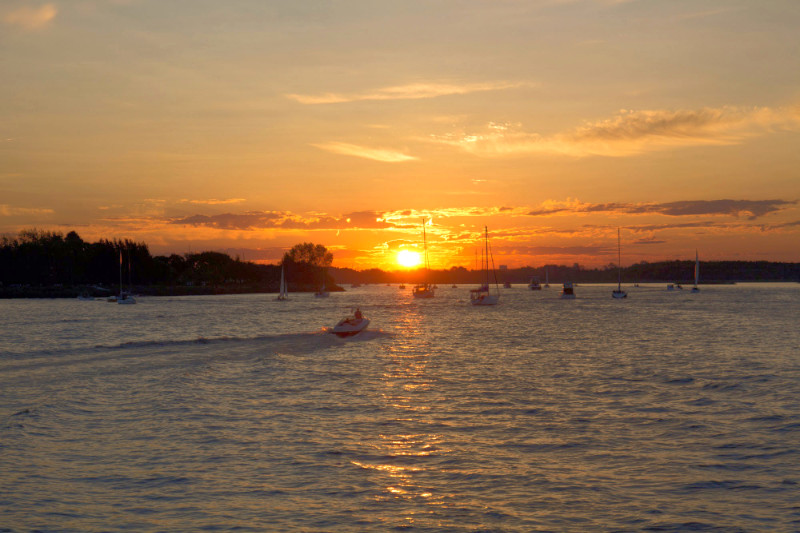
Tigre delta in Buenos Aires Province
Buenos Aires
Buenos Aires can be a busy city - just head downtown at midday - and many people prefer the less hectic lifestyles of Mendoza and Cordoba, for example. Both cities are beautiful and offer a slice of life in Argentina you won’t find anywhere else in Argentina or South America. Smaller cities like Salta and Bariloche are better for the outdoor-lover or someone who wants to get away from traffic.
It’s my favorite place in Argentina and in my top 3 cities in the world, Buenos Aires is a fascinating, romantic, beautiful, exciting, frustrating, and surprising city and a place everyone should visit and enjoy.
It’s also an underrated digital nomad city. However, Argentina has never really taken off as a digital nomad destination. If you’re willing to put up with some flaky internet, BA is a trendy place to live and work. There’s an entrepreneurial spirit in the country (especially in Buenos Aires) and plenty of coworking spaces to meet like-minded people and get work done.
There are also several coliving spaces in Buenos Aires. Coliving (in case you didn’t know) is where you’ve and work in a shared environment. Ideally suited to the location independent and nomad worker, the coliving arrangement is not my style but many people get a lot from these immersive spaces.
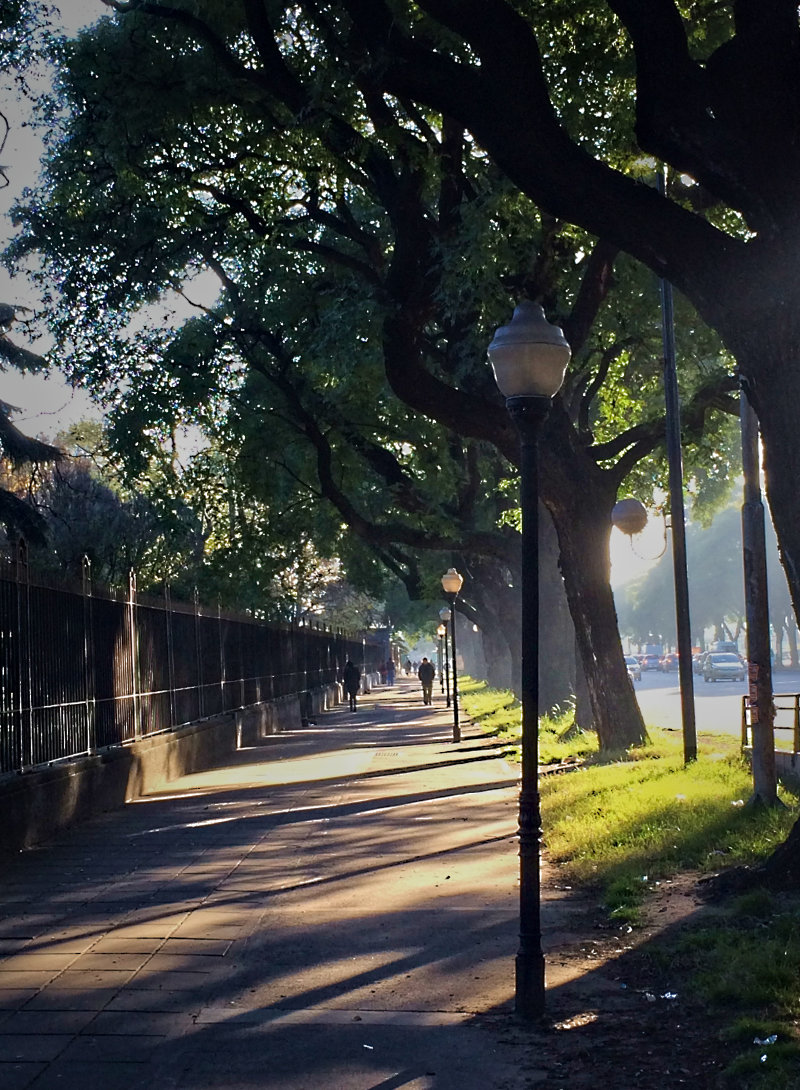
Avenida Bulrich
💡Check out this guide to finding a place to stay in Buenos Aires.
Bariloche
Skiers & Hikers will love this place. Think Switzerland with Spanish accents. The countryside is one of the most beautiful and unspoiled in the world and feels a million miles from Buenos Aires.
And Bariloche is party central for chocolate lovers. I’ve never seen so many chocolate stores in my life. Bariloche locals are super proud of the delicious chocolate they produce here (thanks to the Swiss influence). There’s even a huge chocolate museum.
If you want to spend your weekend horseback riding, waterskiing, snowboarding, or just breathing in the mountain air, Bariloche is the place for you.
Bariloche gets my vote for the best lifestyle city in Argentina.
In high summer and peak winter season, the place explodes with young Porteños and people from all over the world eager to let their hair down. It can get wild. Apart from those peak times, Bariloche is a quiet town. The town is big enough (150,000 residents) to have an active cultural scene and plenty of entertainment opportunities. But it’s not so big as to be overcrowded or polluted.
Homes and apartments to rent just outside of the city center area are superb value. You can buy an apartment here for less than $100,000 and nice 2-bed homes often go for this price.
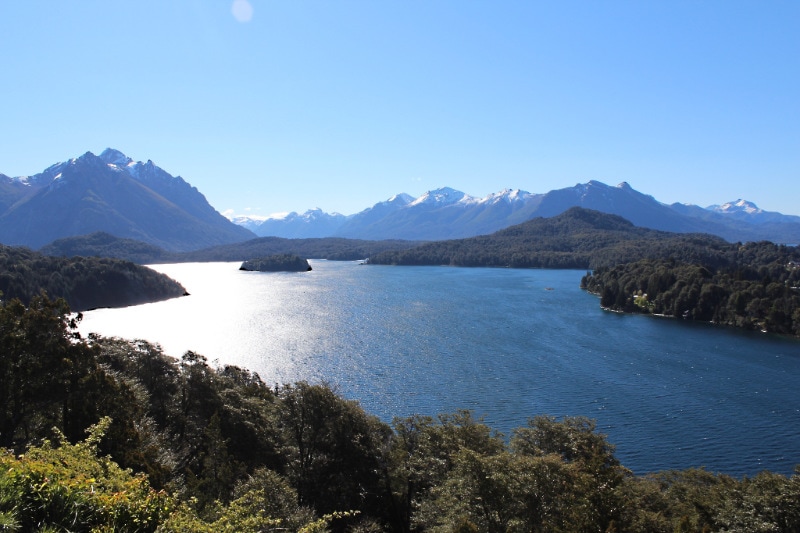
The lakes of Bariloche in the south of Argentina
Work opportunities:
Not a whole lot for foreigners without contacts. Teaching English and the digital nomad route are the best options for newbies. If you can teach skiing, you’re are a wine expert or an outdoorsy type, you might find opportunities in the tourism-related industries. These might be seasonal or part-time opportunities though so it’s best to have an alternative.
Sample cost of living indicators:
-
A meal in a basic restaurant: $8-10
-
Local beer: $3
-
One-way bus (local) bus ticket: $0.50
-
1-bed apartment in city centre: $400 (monthly)

Coffee and postcards in a Bariloche cafe
Pros of living in Bariloche
-
Easy to get around by cheap public transport
-
Can be cheaper to rent (with higher quality) than Buenos Aires if renting long term.
-
Arguably better food than Buenos Aires. And better chocolate, without a doubt.
-
Excellent craft beer
-
Friendly residents from all over Argentina and the world.
-
Fresh air
Cons of living in Bariloche
-
Can get quite cold in winter.
-
It’s a long way from anywhere by car.
-
There’s a lake for swimming and Watersports and it’s beautiful but frigid. Don’t expect it to warm up too much, even in Summer. The sea is a long way away.
Mendoza
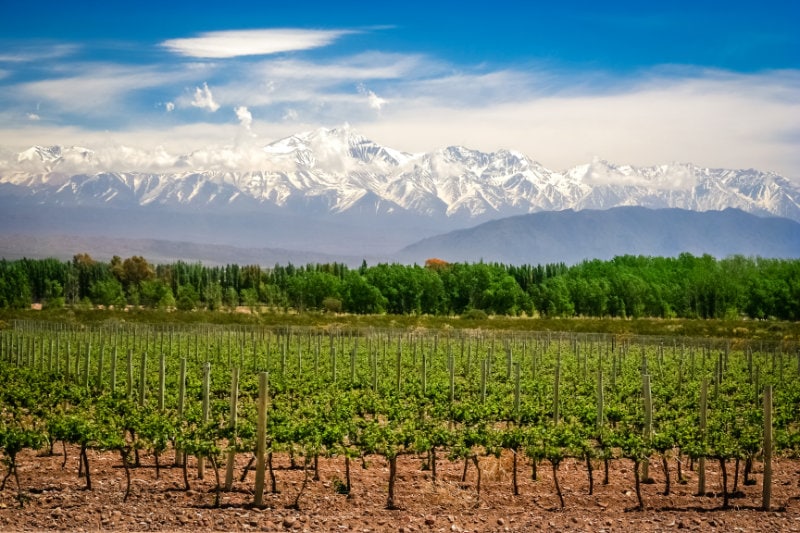
The vineyards of Mendoza
This gem of a city on the edge of the Andes mountains, just over the border from Chile, is one of my favorite places in the country.
Mendoza is surrounded by wine country. This is one of the best wine-growing regions of the world. I can’t enough of Malbec and this is ground zero for the best bottles in the world. There’s even a national wine museum (well worth a visit, by the way)
World-renowned chef Francis Mallmann has a restaurant here. Argentina’s best ski area, Las Leñas, is close by (relatively speaking). If you enjoy hiking, you’re in luck. Mendoza sits at the foot of the Andes. The tallest mountain outside of the Himalayas, Aconcagua, is visible from around the city. And if you want to pop over to Chile, Santiago is just over the mountains.
Many say the most beautiful women in Argentina live in Mendoza. I think there’s something in it. I can’t attest for the men but I’d imagine that the clean air, relaxed lifestyle, and wonderful food here build handsome specimens too.
Pros of living in Mendoza:
-
More relaxed lifestyle than the capital
-
Access to some of the best wine country in the Americas.
-
Hiking and outdoor opportunities are minutes away from anywhere in the city
-
Cheaper than living in Buenos Aires
Cons of Living in Mendoza:
-
Harder to travel for visa runs
-
You might need to go to Buenos Aires for official paperwork
-
International flights connections are not great.
-
Not as exciting as some other cities
Working in Argentina
Working overseas is always a complicated matter. Government policies change and seemingly pointless rules can make workers’ lives difficult. It doesn’t help that Argentina is a country steeped in beauracracy and red tape.
The economist ranks Argentina as one of the worst places in the world to do business. As a previous business owner in the country (for 10 years), I can attest to this. Business dealings in Argentina will test the most patient people in the world. But to paraphrase the great Frank Sinatra, “If you can make it here, you can make it anywhere”. After working and managing businesses here, every other country seems like a cakewalk.
On the other hand, Argentines are what I’d call good at making things happen out of nothing. So many bad things have happened to the country that the people are resilient. They always find a way to bounce back.
If you’re thinking of starting a business in Argentina and hiring employees, I recommend doing in-depth research to see if it’s feasible. This is not the easiest place in the world to employ people. If you’re coming from the US, you will see major differences in the employer-employee dynamic.
There are also “features” like that 13-month payment where employees get an extra month’s payment every year, sick leave for up to 1 year, and holiday pay premiums.
You’ll have the best chance of scoring a job if you speak fluent Spanish and will work for local wages. Unless you’re in a skilled field or possess a skill that other immigrants don’t, you might struggle to find well-paid work. Immigrants from Bolivia and Paraguay flood the cheap labor market in Argentina, making unskilled jobs unattractive to western foreigners.
Bar work will be almost impossible to find legally. So if you do find work in a bar, you’ll be paid “under the table”. this is both risky for you and your employer.
You’ll become a tax resident (if you’re not an employee) after a year of living there so factor this into your plans.
Unemployment
The latest official INDEC release put Argentina’s unemployment rate at 7.5% in Q4 2025, up from 6.6% in Q3 2025.
This reflects figures for the entire region which show that employment is actually rising.
Argentina places in the middle of the pack for Latin American countries.
Travel in Argentina
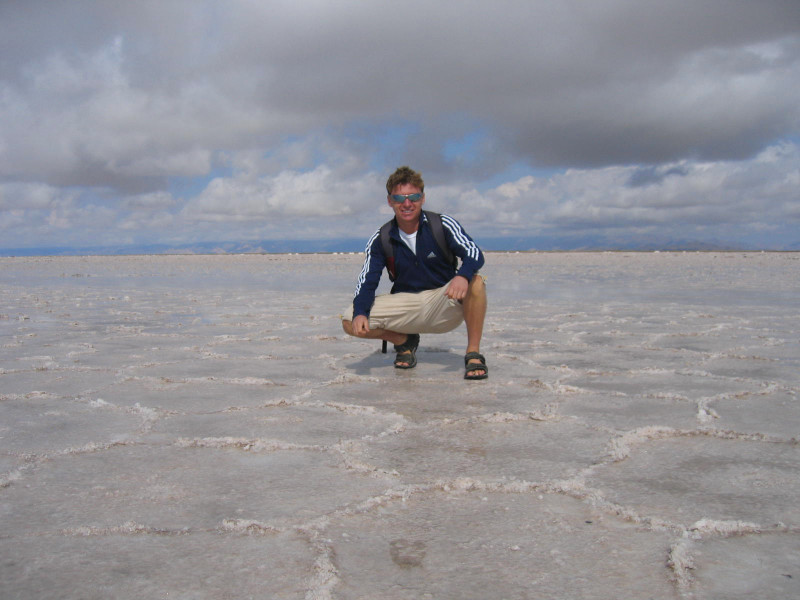
Salinas Grandes salt plains near Cordoba
Bus travel is easy around the cities. There are bus stops on almost every street. The only difficulty is finding them. Often marked with a tiny sign or a sticker (!!), bus stops also have a habit of moving location. It’s best to ask locals for help. The Como Llego bus app is the best tool to use for navigating the hundreds of routes in the city.
Long-distance bus travel is cheap and comfortable. Cama suites and semi-cama bus seats let you sleep on overnight (or day) trips. Distances are huge and you’ll need a full 12 hours to get from Buenos Aires to Mendoza, for example
Flights to and around Argentina
Getting to Argentina is not straightforward unless you’re flying from major hubs. From many European departure points, you’ll have to pass through another European hub first. South America suffers from an inconvenient geographical location; at least as far as airline hubs and worldwide flight routes go.
Flights to Argentina From Europe
From Europe, your best bet is British Airways (BA), Lufthansa, Iberia (IB), and KLM flights to Buenos Aires. Buying an all-in-one ticket from your home location is a good idea. It will generally be cheaper and your luggage allowance is higher. This ticket will also cover any lost luggage expenses for the entire journey.
Flights to Argentina hover between €800-1200 for most of the year and flights within Argentina fluctuate so it’s worth checking those prices regularly. The options below also work for the UK, with similar prices in many cases.
Flights to Argentina From the USA
Although the distances are similar to those from Europe (11-12 hours from the North East of the US), there are a few more options to choose from.
Buenos Aires Airports
Buenos Aires, the main entry point for visitors to Argentina has two airports. The first is the international airport Buenos Aires Ministro Pistarini (EZE), also known as Ezeiza International Airport (thus the airport code letters). The second is the domestic airport Aeroparque Jorge Newbery (AEP), which is located in the city and services international flights to Rio de Janeiro, Asuncion, and others.
Use the Airport buses or a taxi to get to the city
Low-Cost Flights And Cheap Tickets
Aerolineas Argentinas is a low-cost airline that operates domestic and international flights. Can’t say I’d recommend them, but the airline is sometimes the only option.
There are plenty of places to look for cheap airfares these days but here are a few I recommend:
-
Google Flights is always a good place to start and get an overview of current carriers, times, departures, and costs. Don’t forget to check Premium Economy and Business. There are sometimes great deals there too.
-
The ‘error flight’ website SecretFlying often lists cheap flight deals from most major US and European cities to Argentina. The truth is, these cheap tickets are not actual error fares, rather they are low-cost sale periods for flights that the airlines need to fill. However, you can easily find some true bargains. I’ve flown to Argentina from Dublin for less than €400 return with these bargain flights. It’s hard to beat that price but you must be willing to fly at awkward times, like Thursday to Monday (10/11 day stay) and notice can be pretty short.
-
Dollar Flight Club is a great option for you if you can wait for the cheaper flights to arrive. Select airports that you’re comfortable flying out of using this service. You can also add dream destinations (for example, Buenos Aires, Cordoba, Bariloche, etc).You’ll receive regular emails with some of the most competitive prices available. It’s like having a concierge service for cheap flights. Definitely worth a look.
Getting from Buenos Aires Airport to the city
-
Buenos Aires Ministro Pistarini airport is about 50 minutes drive by car to the centre of the city.
-
Minibuses are the best option if you want comfort and value. It costs about $20 (note: the currency moves fast so this can change quickly) for a Minibus. Use the beautifully-named Manuel Tienda León Bus Company for your transport needs. Their website is unreliable so it’s not included here. Check in the airport for details.
-
Don’t take public buses from the airport as the journey takes you through some unsavoury areas and it’s a long journey.
-
Taxis can be very expensive and don’t grab one outside the airport. Negotiate first in the terminal with the official representatives of the White Taxis or a Remis.
-
And last but not least, an excellent option for transfer from either airport to the city is Hoppa. Book in advance and get picked up at the airport and delivered to your destination. Easy!
Arriving in Buenos Aires City
For most people, the flight to Argentina is a long one. Most visitors arrive through the capital’s airport and the first day is spent in recovery mode in a hotel, apartment, or hostel.
Airbnb prices have increased a lot in recent years. Hostels are still good value but consider a Buenos Aires hotel or apartment for your first night at least. It makes your arrival less stressful and gives you fewer things to things about.
Read my detailed guide to accommodation in Buenos Aires for everything you need to know for short and long-term stays in this amazing city.
Frequently Asked Questions
What is the blue dollar in Argentina?
The blue dollar is Argentina’s informal cash-dollar exchange rate. It developed because currency controls and official exchange rates often made dollars worth much more outside the banking system than at the official rate.
Is the blue dollar still worth using in 2026?
Not automatically. In May 2026, the blue and official rates were close, so the old advice to bring cash dollars for a huge advantage was no longer reliable. Check the blue, official, MEP, CCL, and card rates before deciding how to get pesos.
Should I bring cash dollars to Argentina?
Some cash can still be useful as a backup, especially if ATMs fail or card systems have problems. But do not build your whole budget around cash unless the current rates justify it. Cards, bank exchange, digital wallets, or legal transfer options may be competitive depending on the week.
What changed under Milei?
Milei’s government devalued the official peso in December 2023, then relaxed major currency restrictions in April 2025 as part of an IMF-backed reform. The Central Bank allowed the peso to float inside a band and lifted restrictions for individuals accessing the official foreign-exchange market, including the old USD 200 monthly cap.
Compiled with the help of Celano & Asociados, a Buenos Aires-based law firm serving primarily international clients.
Can I carry out documental procedures (DNI, Visas, etc) in Mar Del Plata or do I need to do everything in Buenos Aires?
All the different branches of Immigration accept all type of petitions. You can apply in any of the jurisdictions where there is a Delegacion de Migraciones
Should I first translate all documents to Spanish or it would be enough to go with original documents and only translate if my visa is approved?
Documents must be translated to Spanish in Argentina by an Official Public Translator when you submit the petition and before the adjudication (approved/denied).
The embassy in my country told me I need to pay for a temporary visa. Should I pay before receiving the visa or it would be enough to pay only immigration fees at first?
You need to check with each Consulate about their particular rules. In general, you need to pay the Consular fees in advance and they are non-refundable.
What is the minimum amount of money should I have to be eligible for the rentista visa?
The current requirement is income equal to at least five times the Salario Mínimo, Vital y Móvil. In May 2026, that works out to ARS $1,815,000 per month, because the monthly minimum salary was ARS $363,000. Check Migraciones and the salary council before applying, because the peso amount can change.
Can I connect my bank account in my country with the one in Argentina when I open it?
In general, the answer is no. They are two different entities even though they may share the same brand and name.
Do I need a lawyer if I am from a certain country? Is it difficult for some nationalities to get a rentista visa?
Standard and requirements do not apply to nationals from countries that need a visa to enter Argentina as tourists (typically Asia, Middle East and Africa). These nationalities are denied petitions like the rentista, and for family-based petitions, it is also difficult.